

Thermal Expansion Coefficients of Different Glass Materials

The thermal expansion coefficient is an important parameter when selecting glass materials for laboratory equipment, industrial observation windows, and high-temperature applications. It describes how much a material expands or contracts when its temperature changes.
Different glass materials have different thermal expansion characteristics, which directly affect their thermal shock resistance, dimensional stability, and operating temperature range.
1. Quartz Glass: Extremely Low Thermal Expansion
Quartz glass has an exceptionally low thermal expansion coefficient, typically around 0.5 × 10⁻⁶/K.
This means it expands very little when heated and contracts only slightly during cooling. Its excellent thermal shock resistance makes it suitable for high-temperature furnaces, semiconductor equipment, and specialized laboratory instruments.
2. Borosilicate Glass: Excellent Thermal Stability
Borosilicate glass generally has a thermal expansion coefficient of approximately 3.3 × 10⁻⁶/K.
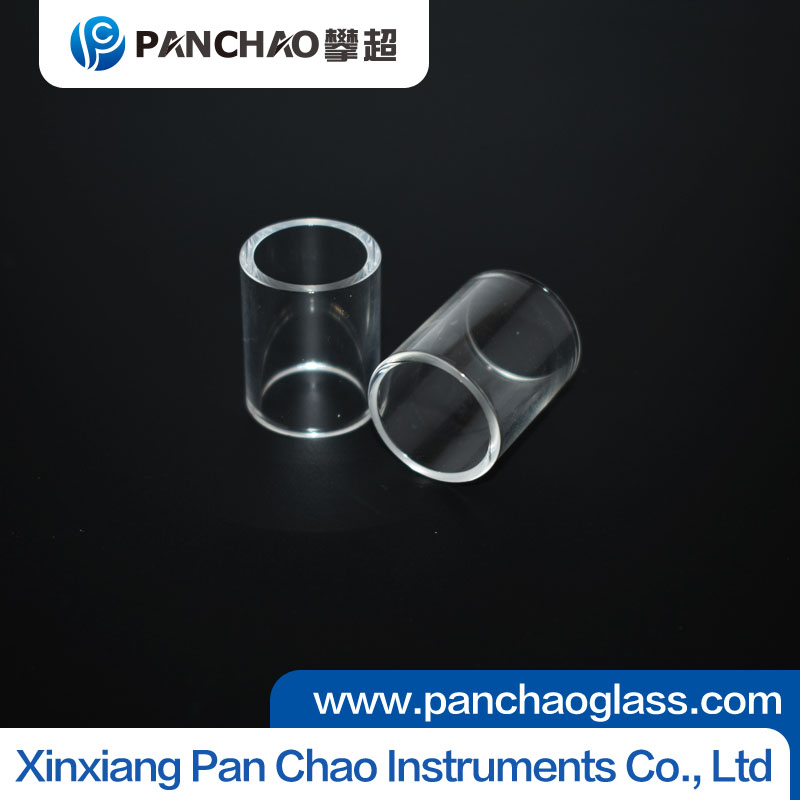
Its relatively low expansion rate provides good resistance to sudden temperature changes. It is widely used in laboratory glassware, chemical processing equipment, and industrial glass tubes.
3. Soda-Lime Glass: Higher Thermal Expansion
Ordinary soda-lime glass typically has a thermal expansion coefficient of around 8–10 × 10⁻⁶/K.
Compared with quartz and borosilicate glass, it expands more significantly when exposed to temperature changes. Therefore, it is generally less suitable for applications involving rapid heating and cooling.
4. Why Does Thermal Expansion Matter?
A high thermal expansion coefficient means a glass component changes dimensions more noticeably as temperature changes. When different materials are connected, unequal expansion can also create additional mechanical stress.
For industrial glass components, material selection should consider operating temperature, temperature fluctuations, component dimensions, installation methods, and surrounding materials.
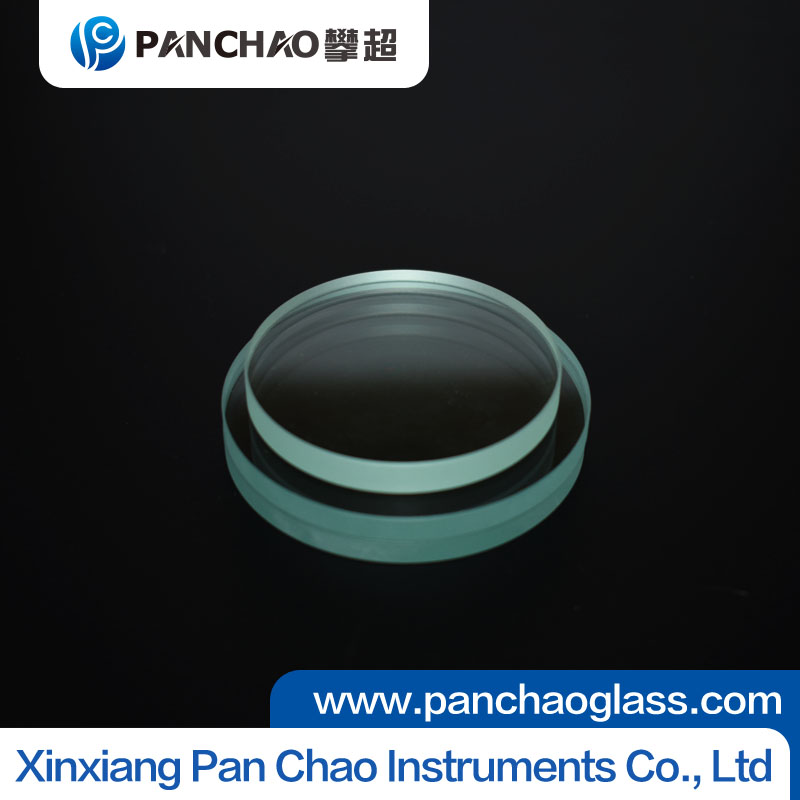
At Pan Chao, we provide customized quartz glass and borosilicate glass tubes, sheets, and sight glass components. Through appropriate material selection and precision processing, we help customers find suitable solutions for laboratory and industrial applications.
Note: The figures above are typical approximate values. Actual coefficients vary depending on glass composition, grade, and measurement temperature.

Related articles
- Detailed Guide to Glass Tube Bending Processes
- Optical Transmission Advantages of Quartz Sight Glass
- Comparison of Three Major Glass Materials: Borosilicate, Quar
- High Temperature Borosilicate Glass with Stable Chemical Perf
- Borosilicate Glass vs Tempered Glass: Thermal Resistance &
- Durable Borosilicate and Quartz Sight Glass for Process Monit
- Tempered Sight Glass with High Mechanical Strength and Safety
- Borosilicate Sight Glass for Pipeline, Tank and Reactor Monit
- Heat-Resistant Borosilicate Glass Plate for Laboratory and In
- Fused Silica Quartz Sight Glass with High UV and IR Transmiss

Xinxiang Pan Chao Instruments Co., Ltd.
Tel: +86 13343800331
Contact person:Carrie Niu
Fax: 0373 303 0331
Email:sales@panchaoglass.com
