
Why Can Glass Materials Remain Stable in High-Temperature Environments?

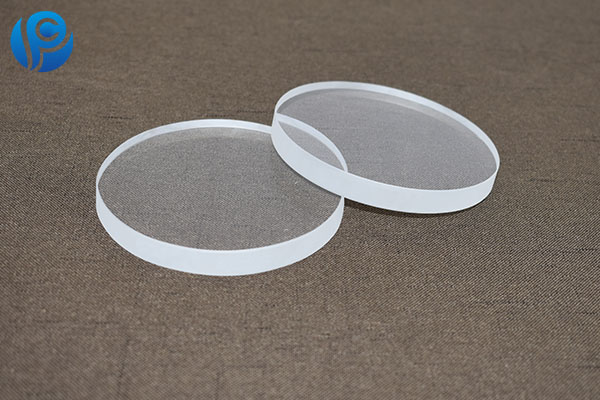
Glass materials are widely used in high-temperature industrial and scientific applications, including furnaces, reactors, and optical systems. Despite being commonly perceived as fragile, certain types of glass can maintain remarkable stability under elevated temperatures. This performance is primarily rooted in their unique atomic structure and composition.
Unlike crystalline materials, glass has an amorphous structure, meaning its atoms are arranged in a disordered but tightly bonded network. In materials such as silica-based glass, strong silicon–oxygen (Si–O) bonds form a three-dimensional network that provides high thermal stability. These bonds require significant energy to break, allowing the material to withstand high temperatures without structural failure.
Another key factor is the high softening point of specialized glass materials. For example, quartz glass can endure temperatures exceeding 1000°C, while borosilicate glass performs reliably at several hundred degrees Celsius. This is because their compositions are engineered to reduce the presence of weak bonding components, increasing overall thermal resistance.
Glass materials used in high-temperature environments also exhibit a low coefficient of thermal expansion. This means they expand and contract very little when exposed to temperature changes. As a result, internal stress caused by thermal gradients is minimized, reducing the risk of cracking or deformation—especially during rapid heating or cooling.
In addition, many industrial glass types offer excellent chemical stability at high temperatures. They resist oxidation and corrosion from gases, vapors, and reactive substances commonly present in high-temperature processes. This ensures that both their structural integrity and optical clarity are maintained over time.
Manufacturing processes further enhance performance. Techniques such as controlled annealing and material purification remove internal stresses and impurities, improving the glass’s ability to withstand extreme conditions.
At Zhongpanxin, we utilize advanced glass materials such as high-purity quartz and borosilicate glass to meet the demands of high-temperature applications. Our products are engineered to deliver consistent performance, durability, and safety—even under the most challenging thermal conditions.
Stability at high temperature is not accidental—it is designed at the molecular level.

Related articles
- Application Boundaries Between Quartz Glass and Borosilicate
- Structural Differences Between Borosilicate Glass and Ordinar
- Typical Applications of Sight Glass in Chemical Equipment
- Application Limits of Anti-Fog Treatment for Sight Glass
- The Relationship Between Sight Glass Thickness and Safety Fac
- The Advantages of High-Purity Quartz Glass and Its Applicatio
- What Is the Difference Between Glass Windows and Sight Glass?
- Application Differences of Thick-Walled Glass Tubes in Labora
- Applications and Processing Considerations of Thick-Walled Gl
- Differences and Connection Methods Between Glass Windows and

Xinxiang Pan Chao Instruments Co., Ltd.
Tel: +86 13343800331
Contact person:Carrie Niu
Fax: 0373 303 0331
Email:sales@panchaoglass.com
