

Application Differences of Thick-Walled Glass Tubes in Laboratories and Industrial Settings

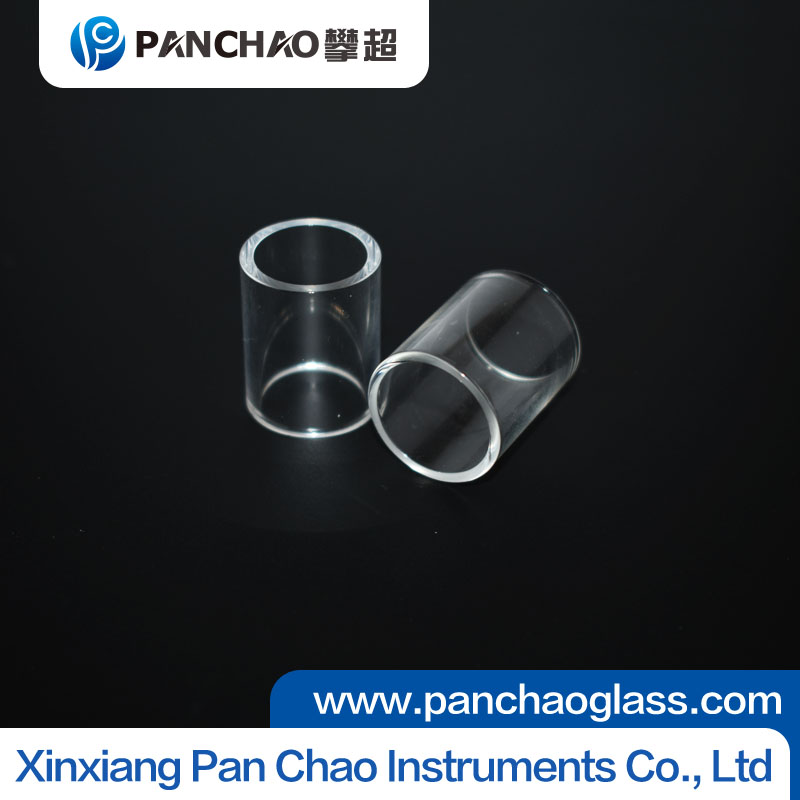
Thick-walled glass tubes are widely used in both laboratory research and industrial production due to their superior mechanical strength, pressure resistance, and thermal stability. However, the requirements and usage conditions in these two fields differ significantly, leading to notable differences in design, processing, and performance expectations.
1. Laboratory Applications
In laboratories, thick-walled glass tubes are primarily used in high-pressure reactions, thermal experiments, and analytical instruments. Precision is the top priority. Tubes must meet strict dimensional tolerances and offer excellent optical clarity for observation and measurement. Materials such as borosilicate or quartz glass are commonly chosen for their chemical inertness and resistance to rapid temperature changes.
Laboratory environments usually involve controlled conditions and smaller batch sizes. As a result, surface quality, transparency, and consistency are emphasized more than extreme mechanical durability. Tubes are often custom-made with polished ends and smooth internal surfaces to reduce contamination and improve repeatability.
2. Industrial Applications
In industrial settings, thick-walled glass tubes are subjected to continuous operation, higher mechanical stress, and harsher environments. They are commonly used in chemical pipelines, sight glass assemblies, reactors, and high-pressure vessels. Here, durability and safety take precedence over optical perfection.
Industrial tubes often require additional processing, such as tempering, chemical strengthening, or protective coatings, to withstand vibration, impact, and corrosive media. Dimensional tolerances may be slightly broader than laboratory standards, but pressure resistance and long-term reliability are critical.
3. Design and Compliance Differences
Industrial applications must comply with safety regulations and pressure vessel standards, while laboratory tubes are typically governed by internal research protocols. Industrial designs often incorporate safety margins, mounting structures, and gasket compatibility.
Conclusion
While both fields rely on thick-walled glass tubes, laboratories prioritize precision and optical performance, whereas industry focuses on strength, safety, and durability. Selecting the right design ensures optimal performance in each environment.

Related articles
- Applications and Processing Considerations of Thick-Walled Gl
- Differences and Connection Methods Between Glass Windows and
- Light Transmittance Testing and Applications of Quartz Glass
- Applications of Glass Tubes in Medical Devices
- Industrial Applications of Sight Glass: The Transparent Guard
- Industrial Applications of Sight Glass: The Transparent Guard
- Application of Ultra White Glass in Building Curtain Walls: B
- The application prospects of high borosilicate glass in the f
- From Laboratory to Kitchen: The Wide Application of High Boro
- Notes on the application of fireplace glass

Xinxiang Pan Chao Instruments Co., Ltd.
Tel: +86 13343800331
Contact person:Carrie Niu
Fax: 0373 303 0331
Email:sales@panchaoglass.com
