

How Is "Internal Stress" in Glass Tubing Created? — A Complete Analysis of the Annealing Proces

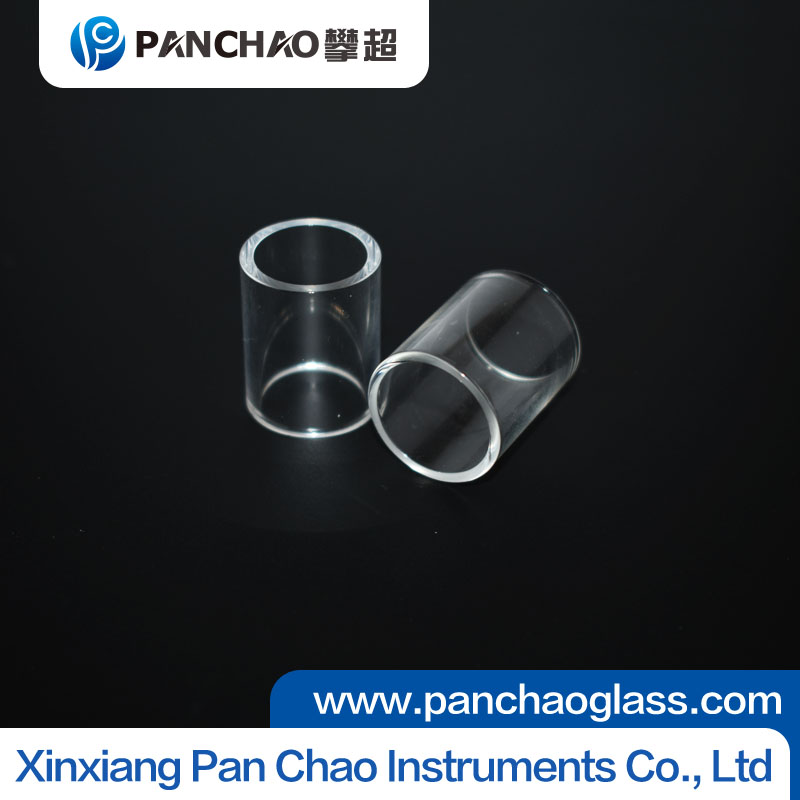
Glass tubing may appear uniformly transparent after forming, but hidden within it can lurk dangerous "internal stress." If this stress is not relieved, it can cause the tubing to crack spontaneously during storage or suddenly shatter under minor impact during use.
How Internal Stress Is Created
Internal stress primarily arises from uneven cooling during the manufacturing process. When glass tubing begins to cool from a molten state (above 1000°C), the thermal conductivity of glass is low, meaning the surface and interior cool at different rates.
The outer layer cools first. The exterior rapidly cools and solidifies, locking its volume into place. The interior cools later. The core remains hot and fluid, but as it cools and contracts, it is constrained by the already rigid outer shell.
This creates a state of "compression on the outside, tension on the inside"—a pair of opposing forces known as internal stress. For thick-walled tubing or complex shapes, these temperature differences create even greater stress. If the cooling rate is too fast, the stress can exceed the glass's intrinsic strength, leading to immediate cracking or leaving behind a latent defect that can fail at any moment.
The Annealing Process: The Only Way to Eliminate Stress
The core operation of annealing is to reheat the glass to its annealing point (for borosilicate glass, this is approximately 560°C) and hold it at that temperature for a sufficient time. At this temperature, the atoms within the glass gain enough energy to rearrange themselves, allowing the internal stresses to relax and dissipate.
After the holding period, the glass must be cooled slowly at a strictly controlled rate, ensuring that the temperature of the tubing is uniform throughout. If the cooling is too rapid, new temperature gradients will be introduced, recreating the stress. The completeness of the annealing process directly determines the tubing's ultimate strength and thermal stability.
How to Determine If Stress Has Been Eliminated
On the production floor, a polariscope is commonly used for rapid inspection. When the glass tubing is placed in polarized light, a stress-free piece will appear uniformly dark. If stress is present, colored fringes or bright and dark areas will be visible. For demanding industrial applications, the stress level is typically required to fall below a specific standard to ensure safety during subsequent processing and use.
The Bottom Line
Annealing is not an optional step; it is the essential "post-treatment" process that gives glass tubing its reliable strength.

Related articles
- How to Improve the Service Life of Industrial Sight Glasses
- How to Control Dimensional Tolerances in Glass Processing
- How Are Shaped Glass Tubes Manufactured?
- How to Control Dimensional Accuracy in Custom Glass Tube Manu
- How to Choose Between Round and Rectangular Sight Glasses
- How to Select the Right Sight Glass for Pressure Vessels
- How Quartz Glass Purity Affects Product Performance
- Tempered Glass vs. Quartz Glass: How to Choose
- How to Improve the Impact Resistance of Sight Glass
- The Stress Distribution Principle of Tempered Glass Sight Win

Xinxiang Pan Chao Instruments Co., Ltd.
Tel: +86 13343800331
Contact person:Carrie Niu
Fax: 0373 303 0331
Email:sales@panchaoglass.com
